
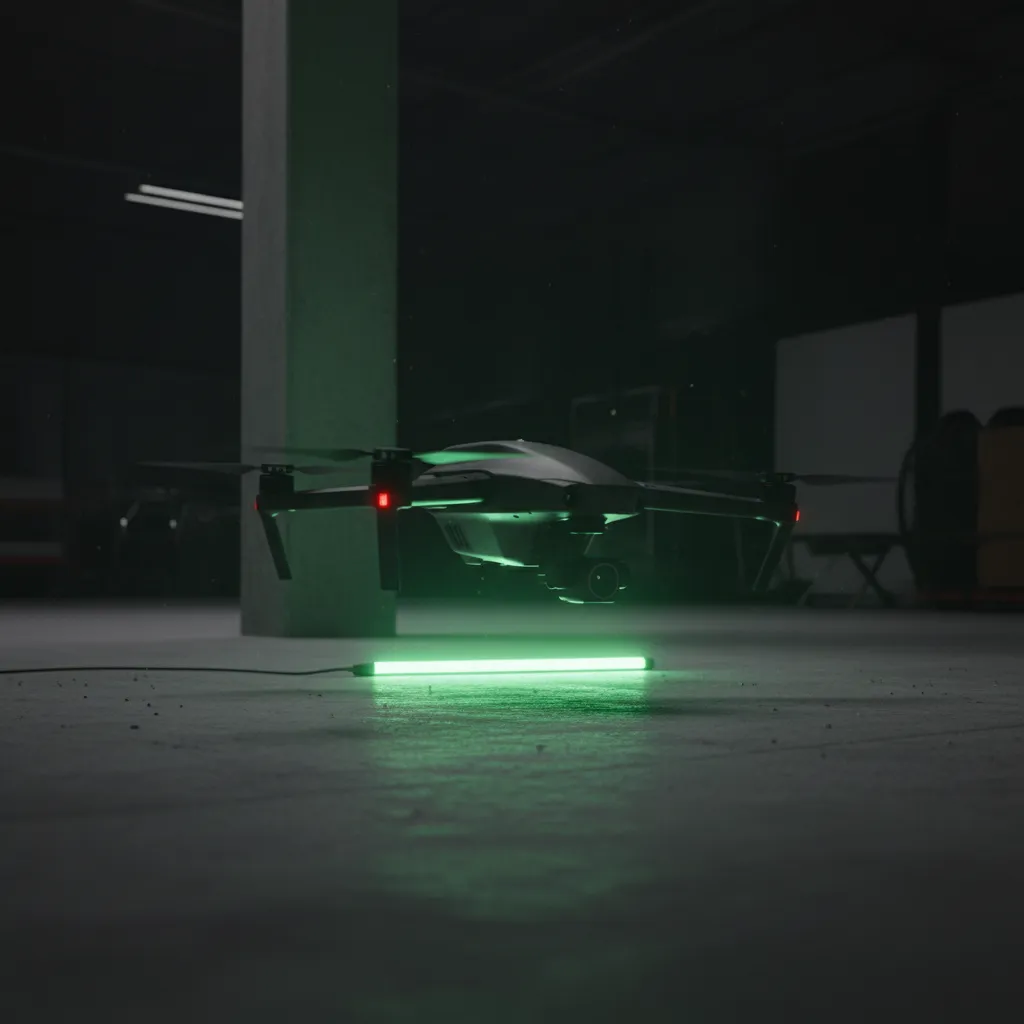
The rapid expansion of unmanned ground vehicles (UGVs), unmanned aerial vehicles (UAVs) and next-generation mobility platforms is driving demand for advanced electric propulsion technologies, with critical expertise increasingly emerging from the electric vehicle sector, according to electric propulsion specialist Everrati.
“Electric propulsion is no longer just about cars,” said Rhodri Darch, former Captain in the British Army and Co-CEO of Everrati. “The technologies powering the EV revolution – from advanced motors to battery integration and software-defined capability – are becoming fundamental to unmanned and autonomous systems. But the pathway matters. UGVs are the natural first move for a company like ours: the technology transfer is close to a lift-and-shift, with a different set of operating requirements. UAVs follow, introducing additional constraints around weight and airspace, and demand a more aerospace-focused engineering discipline.”
Dr Andy Palmer, Founder Palmer Automotive Ltd, said: “Batteries are a key enabling technology. In UAVs and advanced mobility, everything comes back to energy density, weight and control. If you can package more usable energy into less mass, and manage it intelligently, you unlock range, payload and reliability in one move. That’s exactly where electrification expertise translates – we’ve spent the last decade learning how to make batteries not just powerful, but predictable, scalable and safe. Apply that to UAVs, and you move from niche capability to operational utility.” 
Everrati has already received industry enquiries for UGV applications, including the mining sector.
Shared technologies, converging sectors
The automotive industry’s shift away from internal combustion engines has reoriented engineering priorities toward power electronics, software and integrated propulsion architectures, capabilities now in high demand across defence, autonomous systems and emerging mobility platforms.
The convergence is not limited to established automotive players. Formula 1 teams are increasingly exploring the same adjacent sectors, drawn by the same logic: motorsport’s hyper-fast development cycles and highly iterative engineering culture are directly transferable to platforms where rapid capability iteration is operationally essential. It is further evidence of a broader shift in where propulsion expertise is being applied.
Everrati focuses on developing advanced electric propulsion systems for integration into specialist platforms, rather than designing entire vehicles. Through its Powered by Everrati division, the company works with a specialist partner ecosystem – including Helix, DASIS, Motion Applied and Raeon – to deliver propulsion architecture and integration across a growing range of advanced mobility applications.
The partner ecosystem reflects the breadth of engineering required to deliver these systems. Raeon’s proprietary FloLock™ and AnyVolt™ technologies enable bespoke, cell and chemistry-agnostic battery systems – spanning over 450 cell models and chemistries from LTO and sodium to NMC and LFP – to be produced in as little as 12 weeks, addressing a persistent bottleneck in hardware development where software iteration has long outpaced battery innovation. The company’s UK-based manufacturing also provides supply chain resilience for partners in defence and UAV sectors, where procurement continuity is operationally critical.
Motion Applied brings whole-system integration expertise across motors, inverters and batteries, with an emphasis on rigorous validation under real-world conditions, increasingly important as development cycles across advanced mobility sectors compress. Helix, meanwhile, supplies electric motors and inverters developed in some of the most demanding performance environments, such as motorsport, aerospace and defence, where power density and reliability are non-negotiable.
Partner perspectives
Tom Brooks, COO, Raeon: “The demand for battery-powered mobility is hitting a development barrier. Software can improve in weeks, but battery development is still taking years. Our FloLock™ and AnyVolt™ technologies allow us to deliver bespoke battery systems in as little as 12 weeks, ensuring partners across defence, marine, robotics and EV platforms remain resilient and scalable.”
Leighton King, Chief Commercial Officer, Helix: “High power density in a compact, lightweight package isn’t just a performance target; it’s an operational necessity in UAV and advanced mobility applications. Our motor and inverter development is grounded in environments where these demands are absolute – motorsport, aerospace, defence – and that depth of engineering experience is exactly what’s required as these sectors converge. Working with partners like Everrati, who lead propulsion architecture and integration at a system level, allows that specialist expertise to be deployed where it creates the most value.”
Charlie Robson, Global Sales Manager, Electrification, Motion Applied: “As electric propulsion moves into more complex and fast-evolving platforms, success depends on effective whole-system integration. Bringing together motors, inverters, batteries, and supporting systems into a cohesive software-defined architecture requires rigorous validation and a deep understanding of how those elements interact under real-world conditions. As development cycles accelerate across advanced mobility sectors, the ability to iterate quickly is more important than ever as OEMs race to maintain their technical advantage.”
Ricky South, Managing Director, DASIS: “From inverter design to propulsion strategies, the sophistication of power electronics determines how effectively performance can be extracted from the underlying hardware. As platforms evolve and operating environments become more demanding, this layer of expertise – and efficiency in how energy is managed – becomes essential to delivering both performance and reliability.”