
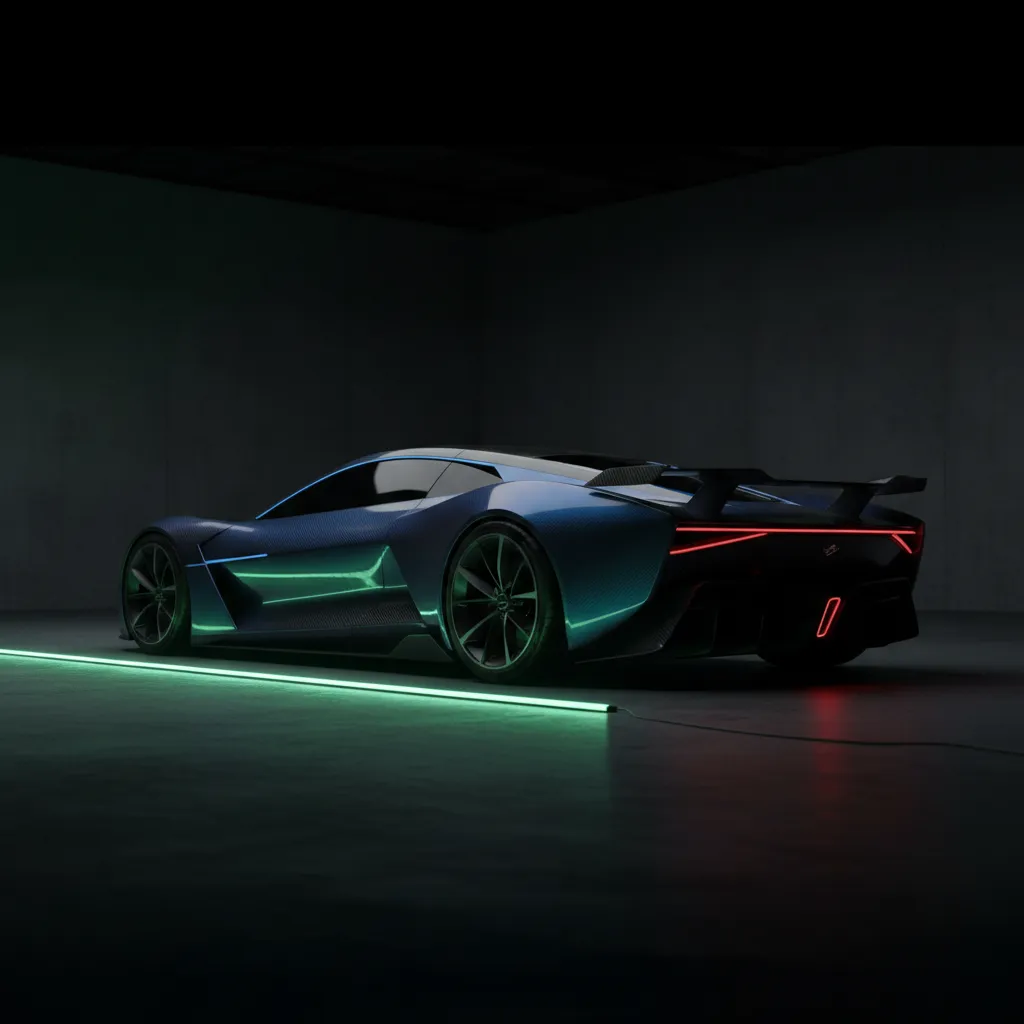
If batteries are the heart of an electric vehicle and motors are the muscles, then the Vehicle Control Unit is undoubtedly the brain. It’s what makes everything work together seamlessly, managing power delivery, optimizing efficiency, and ensuring safety across every system. But VCUs has evolved far beyond simple control boxes. In today’s software-defined vehicles, they’re becoming sophisticated computing platforms that can learn, adapt, and improve over time.
Traditional vehicles relied on dozens of separate electronic control units, each managing a specific function. Engine control here, transmission management there, ABS over in the corner. It created complexity, communication bottlenecks, and limited flexibility for updates or improvements. Powered by Everrati changes that.
What Is a Vehicle Control Unit?
Electric vehicles changed this equation dramatically. With fewer mechanical systems to control and more emphasis on software intelligence, the industry is shifting toward centralized computing architectures. The VCU sits at the center of this transformation, orchestrating everything from throttle response to thermal management.
A VCU is the central computing system that manages an electric vehicle’s powertrain and associated systems. Think of it as mission control for your EV, making thousands of decisions per second to optimize performance, efficiency, and safety.
Core responsibilities include:
- Managing power flow between battery, motor, and inverter
- Coordinating torque delivery based on driver input
- Monitoring and protecting battery health
- Controlling thermal management systems
- Managing regenerative braking
- Running diagnostics and safety checks
But modern VCUs do much more than execute predefined programs. They’re computing platforms capable of running complex software stacks, and adapting their behavior based on driving conditions and user preferences.
VCUs in Software-Defined Vehicles
The concept of a software-defined vehicle represents a fundamental shift in automotive. Rather than hardware-defined functionality that’s fixed at production, software-defined EVs can evolve and improve throughout their lifecycle.
This transformation relies heavily on advanced VCU architectures that embrace:
- Centralized computing – Instead of distributing processing across many separate controllers, modern VCUs consolidate computing power into fewer, more capable units. This reduces wiring complexity, improves communication speed, and makes software updates far more manageable.
- Virtualization and microservices – Like modern cloud computing, advanced VCUs can run multiple software functions as independent services on shared hardware. It allows different functions to be developed, tested, and updated independently without affecting the entire system.
Key VCU Functionalities
Powertrain and Torque Management
The VCU constantly monitors driver input, vehicle speed, battery state, and motor temperature to determine the best torque delivery. This happens in real time, adjusting power output hundreds of times per second to provide smooth, responsive acceleration while protecting components from stress or overheating.
Different drive modes? That’s VCU software changing how it interprets throttle input and manages power delivery. Sport mode provides an aggressive response, while city mode prioritizes comfort driving.
Battery and Thermal Management
Protecting EV battery health is critical for lifespan and safety. The VCU monitors cell voltages, temperatures, and state of charge across the entire pack, managing charging rates and power output to prevent damage. It also syncs thermal systems, ensuring everything stays within the right operating temperature ranges.
Regenerative Braking
When you lift off the throttle or apply brakes, the VCU manages regenerative braking to recapture energy. This involves coordinating between motor operation, mechanical brakes, and battery charging while maintaining smooth, predictable deceleration that drivers can anticipate and control.
Diagnostics and Safety
The VCU constantly monitors system health, detecting faults and implementing protective measures when problems arise. If a sensor fails or a component operates outside normal parameters, the VCU can inform the user and limit power output, switch to backup systems, or safely shut down affected functions while keeping the vehicle drivable.
Connectivity and Updates
Modern VCUs maintain connectivity with cloud services, enabling remote diagnostics and data logging for continuous improvement. This connectivity transforms vehicles from static products into platforms that can evolve with advancing technology.
Safety, Reliability, and Validation
Software controlling critical vehicle functions must meet rigorous safety standards. This involves:
- Hardware-in-the-loop testing that simulates real-world conditions
- Fault injection testing to verify protective responses
- Redundancy in critical systems
- Fail-safe mechanisms that maintain safety even when components malfunction
At Powered by Everrati, we prioritize these validation processes because we know reliability isn’t optional. It’s central to the performance and safety our clients expect.
Design Challenges and Trade-Offs
Creating VCUs for software-defined EVs involves balancing competing priorities.
Integration Complexity
VCUs need to communicate with battery management systems, motor controllers, charging systems, thermal management, and countless sensors. Each interface requires careful design to ensure reliable communication and refined handling of errors or delays.
Scalability and Upgradeability
Designs must accommodate future improvements in processing power, sensor technology, and software capabilities. This means building in headroom and using modular architectures that can grow as requirements evolve.
Cybersecurity
Connected VCUs create potential attack routes that must be secured. This requires encryption, secure boot processes, authenticated updates, and intrusion detection systems that protect critical vehicle functions from unauthorized access.
Future Outlook
VCU technology is advancing quickly. Virtualization is becoming more advanced, making it easier to update and adapt vehicle software. Microservices architectures now allow different vehicle functions to be developed and updated independently.
Artificial intelligence and machine learning are starting to shape how VCUs operate. Predictive algorithms can manage power more efficiently by learning from driving habits, road conditions, and traffic. These smart systems get better over time as they learn and adapt.
The industry is also moving toward standardization. Shared software platforms and common interface standards are making it simpler to combine parts from different suppliers, all while keeping the flexibility that software-defined designs offer.
Note: Everrati does not currently offer AI-driven or fully virtualised VCU systems, but our architecture is designed with this evolution in mind.
Everrati’s Perspective
At Powered by Everrati, we understand that VCU technology isn’t just for mass-market manufacturers. Our electrification projects and production work for manufacturers demand the same level of control, safety, and performance that you’d expect from any modern electric vehicle.
We leverage advanced VCU architectures to deliver:
- Precise powertrain control that preserves vehicle character
- Sophisticated battery management for longevity and performance
- Comprehensive diagnostics and safety systems
- Flexible software that can be tailored to specific applications
- Scalable solutions that work across different vehicle types
Whether we’re converting a treasured classic or supporting low-volume production, our EverCore VCU represents the intelligent hub that makes electric performance exceptional. It’s what allows us to fine-tune throttle response, optimize regenerative braking, and ensure that every vehicle we work on delivers the refined, confident driving experience our clients expect.
The future of electric vehicles is increasingly defined by software intelligence, and the Vehicle Control Unit stands at the center of this transformation. As vehicles become more sophisticated and capable, the VCU’s role will only grow in importance. Ready to explore what our EverCore VCU technology can do for your project? Let’s talk about bringing software-defined capability to your electric vehicle vision.